A Treatment With Two Aims
Therapeutic ultrasound is a noninvasive treatment that sends sound-wave energy into targeted tissues. In rehabilitation, it may be used both to ease pain and to influence processes involved in tissue repair. Research reviews describe possible changes in cell activity and tissue structure, but much of the healing evidence comes from animal studies, not human trials (review of low-intensity ultrasound research).
That makes ultrasound a possible component of care, not a promise of faster recovery. Whether it fits depends on the injury, symptoms, and treatment goals. At West Buffalo Chiropractic, ultrasound therapy is one option among services that include soft-tissue therapy and rehabilitation, with care informed by an individual assessment. It does not replace appropriate exercise or other recommended treatment.
How Therapeutic Ultrasound Is Delivered
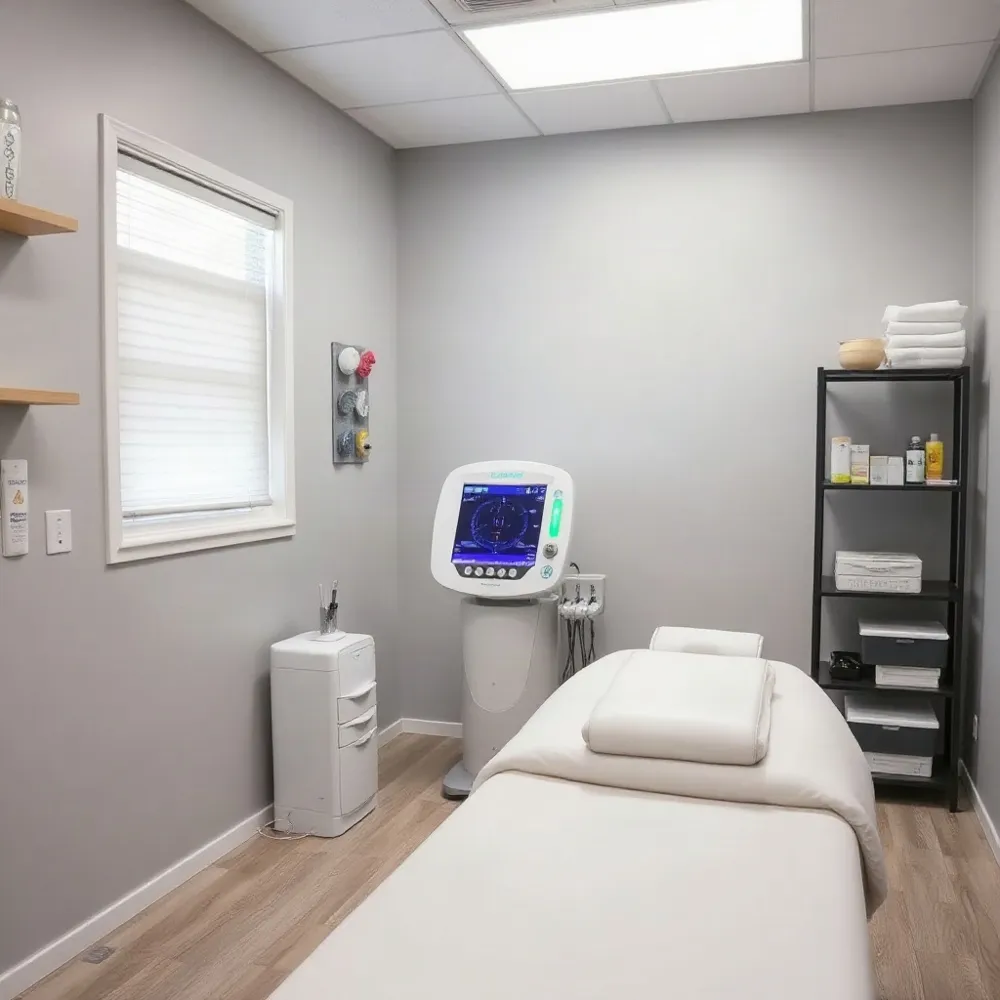 Therapeutic ultrasound delivers high-frequency sound waves to a selected area of soft tissue. A handheld transducer converts electrical energy into sound-wave vibrations, while gel helps the waves pass from the probe through the skin. The clinician moves the probe over the treatment area rather than holding it still. WebMD’s overview of ultrasound physical therapy describes this basic application.
Delivery depends on several settings, including frequency, intensity, mode, duration, and the location being treated. Conventional therapeutic ultrasound has commonly used frequencies of 1–3 MHz and either pulsed or continuous delivery. These are not universal settings: clinicians select parameters for the tissue and treatment goal.
Continuous ultrasound can warm tissue, an effect that may be used to ease some types of soft-tissue discomfort. Low-intensity pulsed ultrasound is a distinct approach in which mechanical stimulation is considered more prominent than heating. Its settings and proposed effects differ from those of other ultrasound treatments, and research has not established one protocol for every injury. A review of low-intensity pulsed ultrasound describes this variation and the need for condition-specific evidence.
A typical application begins with the clinician checking the skin, then applying gel and moving the probe across the selected area. At West Buffalo Chiropractic, ultrasound therapy is one of several services available within a broader approach that also includes rehabilitation and soft-tissue therapy.
Ultrasound may accompany therapeutic exercise, mobility work, or hands-on care rather than replace those parts of rehabilitation. Whether it fits depends on the diagnosis, symptoms, and treatment goals. West Buffalo Chiropractic, led by Dr. Francisco Vaquero, D.C., provides personalized chiropractic care, so a clinician can assess the individual situation and decide whether ultrasound belongs in the plan.
What Tissue Healing Studies Report
A systematic review examined 35 studies of low-intensity therapeutic ultrasound, defined as treatment delivered at no more than 1.5 W/cm². The studies covered tendons, skeletal muscle, ligaments, and tendon–bone junctions. Most used animal models, so their biological and mechanical findings do not prove that people will experience the same results. The review of low-intensity ultrasound and soft-tissue healing describes potential effects, not guaranteed outcomes.
In tendon studies, treated tissue showed greater tensile or rupture strength and extensibility, along with increased collagen production and better collagen organization than untreated controls. Some strength benefits were reported between five and 42 days after injury. Earlier treatment appeared more beneficial in some experiments, with the review highlighting the first 14 days. This is a research observation, not a universal recommendation about when treatment should begin.
Animal studies of muscle contusions found increased satellite-cell proliferation and higher expression of myogenin and actin, proteins associated with muscle repair. Some also found reduced COX-2 expression, a marker related to inflammation. Human muscle studies were limited, and reported effects were not uniform; for example, one study’s finding on muscle relaxation was not significantly different from controls.
Ligament studies reported improvements in mechanical measures such as ultimate load, stiffness, and energy absorption. In animal research on tendon–bone junctions, ultrasound was associated with new bone formation, better tissue integration, and increases in collagen and VEGF. These findings may inform research on recovery after procedures such as ACL reconstruction, but they do not establish a guaranteed clinical benefit.
Therapeutic ultrasound may help relieve pain or support tissue repair for some soft-tissue problems, but results differ by condition and are not assured. At West Buffalo Chiropractic, ultrasound is one option within broader personalized care that may also include soft-tissue therapy and rehabilitation. A clinician can assess the cause and severity of pain and decide whether it fits alongside guided exercise or other care. Severe or worsening pain, or pain after a significant injury, warrants an evaluation rather than relying on ultrasound alone.
Evidence Depends on the Condition
 Therapeutic ultrasound may ease pain in some musculoskeletal conditions, but results vary with the diagnosis, device type, and treatment settings. Evidence for low-intensity pulsed ultrasound (LIPUS) should not be treated as proof that every form of therapeutic ultrasound works in the same way. A review of LIPUS research found mixed clinical results across conditions, alongside challenges in comparing studies with different protocols. The review of low-intensity pulsed ultrasound calls for more condition-specific clinical trials.
For tendon pain, a systematic review reported that three human studies of epicondylitis and patellar tendinopathy found clinically meaningful pain reductions of up to 70% after daily continuous treatment over six weeks. However, two of those studies found similar pain decreases with pulsed ultrasound and control groups, so the results do not establish a consistent benefit for every patient. Most of the wider evidence on soft-tissue healing in that review came from animal studies, not human trials. The systematic review of low-intensity ultrasound for soft-tissue healing emphasizes the need for more human research.
A 2024 review found evidence that ultrasound reduced pain for knee conditions, but results for shoulder pain were mixed and highly variable. Separately, a review of 16 trials involving 1,063 people with myofascial pain associated low-intensity ultrasound with lower pain scores than sham treatment or no treatment. It did not establish better functional outcomes than other therapies. Differences in protocols and the limited amount of human research make it difficult to predict who will benefit or to promise a particular result.
Transcutaneous electrical nerve stimulation (TENS) and ultrasound use different methods and may serve different purposes. Neither is universally superior; the choice depends on the condition, treatment goals, and clinical assessment. At West Buffalo Chiropractic, ultrasound is one of several available services, alongside spinal adjustments, soft-tissue therapy, and rehabilitation, allowing care to be considered within a broader assessment rather than as a guaranteed stand-alone solution.
Planning a Treatment Session
A therapeutic ultrasound application often takes about five to 10 minutes for one treatment area, but the time depends on the area being treated, the care goals, the device, and your clinical situation. At West Buffalo Chiropractic, ultrasound is one of several services that may be considered alongside rehabilitation and other care.
Treatment schedules also vary. Some studies use several applications over a short period, but there is no standard frequency or duration for every condition. One knee osteoarthritis study, for example, used four- or eight-minute applications across 10 sessions over two weeks. That was a study protocol, not a general recommendation. A clinician should set a plan for your needs and reassess how you respond. Research on therapeutic ultrasound for musculoskeletal conditions
Ordinary clinic applications differ from wearable, prescription-use low-intensity ultrasound systems. A review describes certain wearable systems as intended for home use under licensed medical supervision, with follow-up from a provider. Their indications and treatment times vary by device. The review distinguishes Exogen, typically used for certain fracture-healing indications, from SAM, described for soft-tissue applications such as tendon, ligament, and muscle injuries. Neither should be assumed suitable for every patient or condition. The review of low-intensity ultrasound for soft-tissue healing
Risks and Treatment Precautions
 Therapeutic ultrasound is generally low risk when a trained clinician selects appropriate settings and technique. You may notice warmth or mild discomfort during treatment. If the probe remains in one place too long or exposure is poorly controlled, however, tissue can overheat, causing pain or injury. WebMD’s overview of ultrasound physical therapy describes why clinicians keep the probe moving to reduce the risk of superficial burns.
The probe should keep moving across the treatment area. Tell the clinician immediately if you feel sharp pain, burning, or an unusual sensation, so they can adjust or stop the treatment. At West Buffalo Chiropractic, ultrasound is one of several services available as part of personalized care, and its suitability should be assessed for each patient rather than assumed.
Treatment is generally avoided over the eyes, reproductive organs, a pregnant uterus, active bleeding, or a known or suspected blood clot. It should also not be applied over cancerous growths, pacemakers or other implanted electronic devices, or directly over the brain, spinal cord, or exposed nerves. A clinician may modify or defer treatment when a health condition or pregnancy raises safety concerns.
Extra caution may be needed over areas with reduced sensation or circulation, fragile skin, acute inflammation, or metal implants. Reduced sensation can make it harder to notice excessive warmth or irritation. Before treatment, tell your provider about pregnancy, medical conditions, and any implants. A qualified clinician can review these factors and decide whether ultrasound is appropriate, and whether settings or the treatment plan should change.
A Possible Part of Recovery
Therapeutic ultrasound may help manage pain or support tissue-repair processes in some situations, but it is not a guaranteed way to heal faster. Research findings vary by condition, and much of the evidence on soft-tissue repair comes from animal studies rather than trials in people, as a review of low-intensity ultrasound explains.
A professional assessment can help determine whether ultrasound fits your injury, symptoms, and recovery goals. At West Buffalo Chiropractic, Dr. Francisco Vaquero, D.C., provides care that may include ultrasound alongside rehabilitation and other services, such as soft-tissue therapy or exercise-based care. The plan can be adjusted according to your response, rather than relying on ultrasound alone.
Discuss your options with a qualified clinician, who can weigh the evidence for your condition and recommend an individualized course of care. Research on low-intensity ultrasound and soft-tissue healing